
Introduction to Portable Solar Generator with Panels
Portable solar generator with panels represent the future of mobile, clean energy solutions. These innovative systems combine rechargeable battery stations with photovoltaic panels to deliver power anywhere. Unlike traditional fuel-powered generators, they produce zero emissions and operate silently. The technology has advanced significantly, making renewable energy accessible for camping, emergencies, and off-grid living.
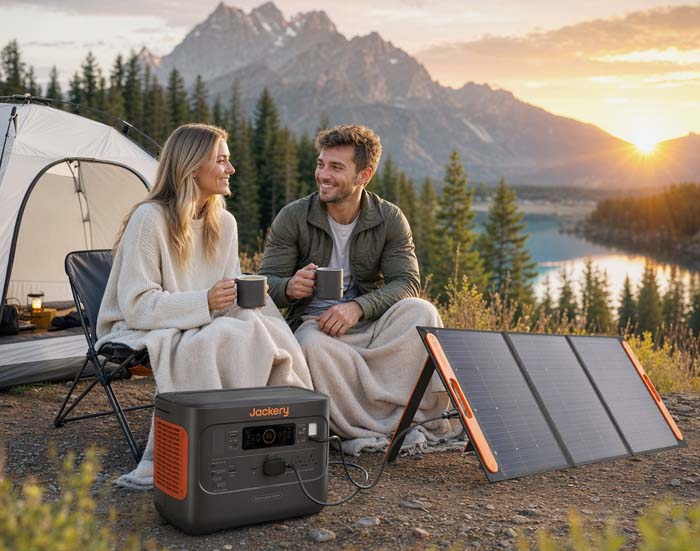
The market has exploded with options ranging from compact 300-watt units to robust 3000-watt powerhouses. Each portable solar generator with panels includes essential components that work together seamlessly. Understanding how these generators function helps you make informed purchasing decisions.
This comprehensive guide explores everything you need to know about these innovative power systems. We’ll cover technical specifications, practical applications, and buying strategies. By the end, you’ll understand which portable solar generator with panels configuration matches your specific power requirements.
Reviewed Products
✅ Jackery3600W 3584Wh HomePower 3600 Plus Power Station with 2x 200W Solar Panels
✅ Jackery 2200W 2042Wh Explorer 2000 v2 Portable Power Station with 2x200W Solar Panels
✅ Jackery 1500W 1070Wh Portable Power Station with 200W Solar Panel LiFePO4 Battery
✅ UDPOWER 1200W 1190Wh Power Station, Fast Charging, with 210W Solar Panel
✅ EBL 1000W 999Wh Portable Power Station (Peak 2000W) with 200W Portable Solar Panel
✅ BROWEY 1000W 614Wh Power Station with Built-in Solar Panel, LiFePO4 Battery
✅ GRECELL 500W Power Station with 100W Solar Panel High-Efficiency Battery Charger
✅ EBL 500W 519.48Wh Power Station (1000W Peak) with 100W Solar Panel
✅ MARBERO 300W 296Wh Power Station Pure Sine Wave with 60W Solar Panels
✅ ZeroKor 280Wh 300W Portable Power Station with Foldable 60W Solar Panel Pure Sine Wave
✅ Takki 222Wh Portable Power Station 40W Solar Panels Solar Generator 250W Pure Sine Wave
✅ ZeroKor 146Wh Portable Power Station with Foldable 40W Solar Panel, 100W Generator
✅ Apowking 146Wh Solar Powered Generator 200W Peak/100W Rated, with Solar Panels 40W
✅ Takki 88.8Wh (Peak 120W) Solar Generator Kit – Portable Power for Camping & Emergencies
Defining Solar Generators with Integrated Solar Panels
A portable solar generator with panels consists of two primary elements working in tandem. The generator itself is a portable power station containing batteries, inverters, and charge controllers. The solar panels capture sunlight and convert it into electrical energy.
Most manufacturers offer complete kits that bundle both components together. These all-in-one packages ensure compatibility and simplified setup. Some advanced users prefer modular systems that allow customization and future expansion.
The term “solar generator” technically refers to the entire ecosystem. However, it’s commonly used to describe the battery station alone. For clarity, we focus on complete portable solar generator with panels throughout this guide.
Why Buy a Portable Solar Generator with Panels Instead of Separately?
- Guaranteed Compatibility: Bundled systems are designed to work seamlessly together, eliminating concerns about voltage, connectors, or performance mismatches.
- Plug-and-Play Convenience: No need to research or configure components—everything is ready to use out of the box, saving time and effort.
- Optimized Charging Efficiency: Panels included in a bundle are often tuned to maximize the generator’s input capacity, ensuring faster and more efficient charging.
- Cost Savings: Buying a complete kit is typically more economical than purchasing a generator and panels separately.
- Simplified Warranty and Support: A single manufacturer covers the entire system, making troubleshooting and claims easier.
- Portable and Cohesive Design: Bundled kits are designed with portability in mind, often including matching cables and compact panel designs.
- Reduced Risk of Errors: Avoid common mistakes like incompatible connectors, incorrect wattage pairing, or underperforming setups.
Why The Solar Set Outperform Traditional Generators
Traditional fuel-powered generators have dominated portable power for decades. Yet solar-powered alternatives now offer compelling advantages across multiple categories. The comparison reveals why many users are making the switch to portable solar generator with panels.
Operational Benefits:
- Zero noise pollution during operation
- No toxic fumes or carbon monoxide risks
- Minimal maintenance requirements
- No fuel storage or transportation needed
- Safe for indoor use in emergencies
Economic Advantages:
- No ongoing fuel costs after initial investment
- Longer lifespan with proper care (10+ years)
- Lower maintenance expenses
- Potential tax incentives in some regions
Environmental Impact:
- 100% renewable energy source
- Reduces carbon footprint significantly
- No oil or fuel spills
- Supports sustainable energy practices
How Portable Solar Generator with Panels Work
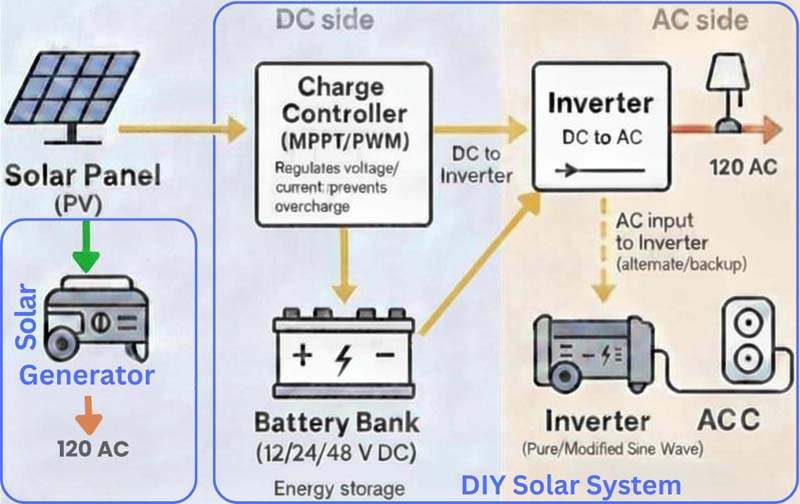
Understanding the operational mechanisms helps optimize performance and troubleshoot issues. The process involves multiple stages of energy conversion and management. Each component in a portable solar generator with panels plays a critical role in delivering usable electricity.
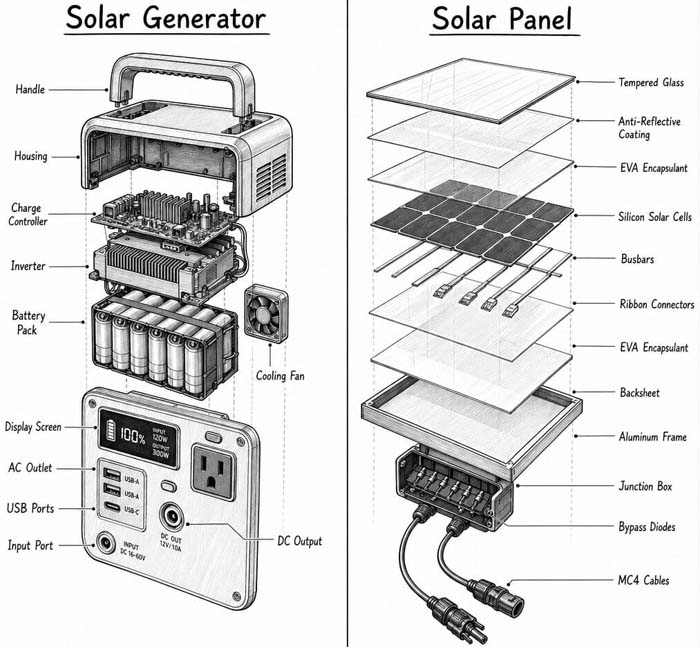
Core Components: Battery, Inverter, Charge Controller, and Foldable Panels
The battery pack stores electrical energy for later use. Modern portable solar generator with panels typically use lithium-ion or lithium iron phosphate (LiFePO4) cells. These batteries offer high energy density and thousands of charge cycles.
The inverter converts DC battery power into AC electricity. This allows you to run standard household appliances and electronics. Pure sine wave inverters provide the cleanest power for sensitive devices.
The charge controller regulates incoming solar energy to protect batteries. MPPT (Maximum Power Point Tracking) controllers optimize charging efficiency. They automatically adjust to varying sunlight conditions throughout the day.
Solar panels contain photovoltaic cells that generate electricity from sunlight. Most portable systems use monocrystalline panels for optimal efficiency. Foldable designs enhance portability while maintaining adequate surface area.
Energy Flow: From Sunlight Capture to AC Output
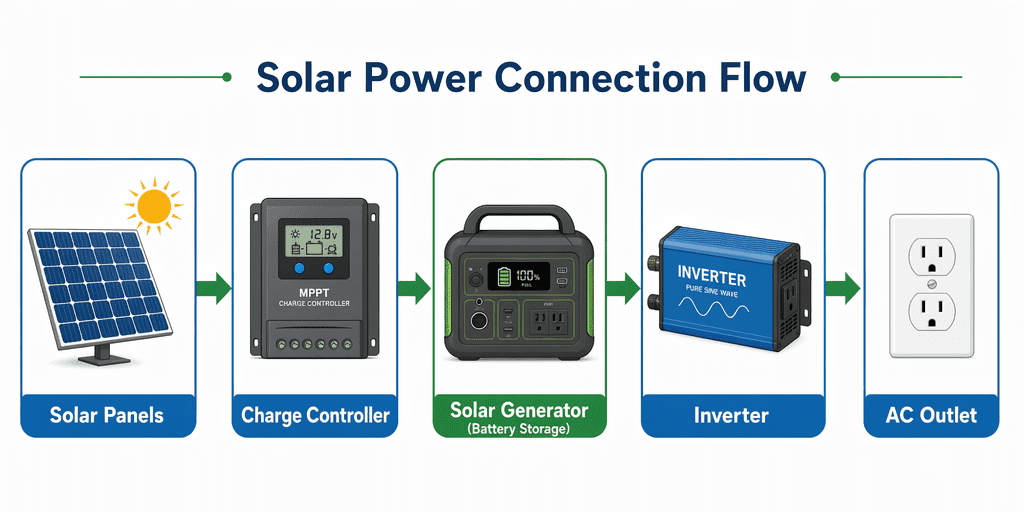
The process begins when photons strike the solar panel surface. Photovoltaic cells convert this light energy into direct current (DC) electricity. The generated voltage flows through cables to the charge controller.
The charge controller conditions the power before sending it to batteries. It prevents overcharging and manages voltage fluctuations. This protection extends battery lifespan significantly in any portable solar generator with panels.
Stored energy remains as DC power within the battery bank. When you plug in devices, the inverter activates automatically. It transforms DC into AC power suitable for standard appliances.
Multiple output ports allow simultaneous device charging. USB ports provide 5V DC for phones and tablets. AC outlets deliver 110V/120V for larger appliances and tools.
Charging Process and Efficiency Factors
Charging speed depends on several interconnected variables. Panel wattage determines the maximum input potential. A 200-watt panel can theoretically deliver 200 watts under ideal conditions.
Key Efficiency Factors:
- Sunlight intensity: Direct sunlight provides maximum charging rates
- Panel angle: Perpendicular positioning to the sun optimizes capture
- Temperature: Extreme heat can reduce panel output by 10-15%
- Shading: Even partial shade significantly impacts performance
- Panel cleanliness: Dust and debris block photon absorption
- Cable quality: Thin or damaged cables create resistance losses
Real-world efficiency typically ranges from 60-80% of rated capacity. A 400-watt generator with solar panel setup might charge at 300 watts in practice. Understanding these limitations helps set realistic expectations for your portable solar generator with panels.
Key Benefits
Portability and Silent Operation for Camping and Emergencies
Modern portable solar generator with panels prioritize mobility without sacrificing power. Most units feature ergonomic handles or wheels for easy transportation. Compact designs fit in vehicle trunks or RV storage compartments.
Weight varies significantly based on capacity and battery chemistry. Entry-level 500Wh portable solar generator with panels typically weigh 12-18 pounds. Larger 2000Wh systems can reach 40-60 pounds with panels.
Silent operation transforms the outdoor experience. Unlike loud gas generators, solar units produce zero noise pollution. You can charge devices inside tents without disturbing fellow campers or wildlife.
Emergency preparedness benefits are substantial. Power outages become manageable with reliable backup electricity. Essential devices like medical equipment, refrigerators, and communication tools remain operational.
Eco-Friendly and Cost Savings Over Time
Environmental benefits extend beyond simple emissions reduction. Portable solar generator with panels eliminate dependency on fossil fuels entirely. Each charge cycle represents 100% renewable energy utilization.
The Environmental Protection Agency notes that reducing fossil fuel consumption significantly decreases greenhouse gas emissions. Solar generators contribute to this reduction at the consumer level.
Long-term cost analysis favors solar technology decisively. Initial investment ranges from $500 to $3000 depending on capacity. Gas generators require ongoing fuel purchases that accumulate over time.
10-Year Cost Comparison Example:
- Solar system: $1500 initial + $50 maintenance = $1550 total
- Gas generator: $800 initial + $200/year fuel + $100 maintenance = $2900 total
- Savings: $1350 over 10 years with portable solar generator with panels
Safety Advantages Over Gas Generators
Safety considerations strongly favor solar technology. Traditional generators produce deadly carbon monoxide gas. According to Consumer Product Safety Commission data, generator-related CO poisoning causes numerous deaths annually.
Portable solar generator with panels eliminate this risk entirely. No combustion means no toxic fumes or ventilation requirements. You can safely operate them indoors during severe weather emergencies.
Additional Safety Features:
- No hot surfaces that cause burns
- No flammable fuel storage required
- Built-in overcharge and discharge protection
- Short-circuit prevention systems
- Overheating auto-shutoff mechanisms
- No spark ignition risks
Types and Configurations of Portable Solar Generator with Panels
All-in-One Kits vs. Modular Expandable Systems
All-in-one packages provide everything needed in a single purchase. These portable solar generator with panels kits include matched panels, cables, and the power station. They’re ideal for beginners who want simplified setup and guaranteed compatibility.
Modular systems offer flexibility for advanced users. You can start with a basic power station and add panels incrementally. This approach allows customization based on evolving power requirements.
Expandable battery configurations represent the premium tier. Some manufacturers offer additional battery packs that connect to the main unit. This doubles or triples total capacity without replacing the entire portable solar generator with panels system.
Capacity Tiers: Small (Under 1kWh), Medium (1-3kWh), Large (3kWh+)
Small Systems (200-999Wh):
Perfect for weekend camping trips and minimal power needs. These lightweight portable solar generator with panels charge smartphones, tablets, laptops, and small appliances. Typical runtime: LED lights for 40+ hours or laptop charging 5-10 times.
Medium Systems (1000-2999Wh):
The sweet spot for most users balancing capacity and portability. Capable of running mini-fridges, CPAP machines, and power tools. Ideal for extended off-grid trips and emergency home backup.
Large Systems (3000Wh+):
Designed for serious off-grid living or whole-home backup. Can power refrigerators, TVs, and multiple devices simultaneously. Some portable solar generator with panels support 240V appliances with dual inverter configuration.
Panel Compatibility: Monocrystalline vs. Flexible Options
Monocrystalline panels dominate the portable solar market. They offer 18-23% efficiency in converting sunlight to electricity. Black or dark blue appearance and rigid aluminum frames characterize these panels.
Monocrystalline Advantages:
- Higher efficiency ratings
- Better performance in low light
- Longer lifespan (25+ years)
- More compact for equivalent power
Flexible panels provide unique installation options. Thin-film technology allows mounting on curved surfaces. They’re lighter but typically less efficient (15-18% conversion).
Generator with solar panel compatibility matters significantly. Always verify voltage and connector compatibility before purchasing additional panels. Mismatched specifications can damage equipment or prevent charging.
Top Features to Evaluate in Portable Solar Generator with Panels
Battery Technology: LiFePO4 vs. Lithium-Ion Lifespan
Battery chemistry fundamentally affects performance, safety, and longevity. Two technologies dominate the current portable solar generator with panels market landscape.
Lithium-Ion (Li-ion) Batteries:
- Cycle life: 500-1000 full charge cycles
- Energy density: Higher (more capacity in less space)
- Cost: Generally less expensive
- Temperature sensitivity: Moderate
- Degradation: Gradual capacity loss over time
Lithium Iron Phosphate (LiFePO4) Batteries:
- Cycle life: 2000-3500+ full charge cycles
- Energy density: Lower (slightly larger/heavier)
- Cost: 20-40% premium price
- Temperature tolerance: Excellent performance in heat
- Safety: Superior thermal stability
- Longevity: Can last 10+ years with proper use
LiFePO4 technology represents the premium choice for portable solar generator with panels. The extended lifespan justifies higher upfront costs for frequent users. Casual users may find standard lithium-ion batteries sufficient.
Output Ports: AC, DC, USB, and Wireless Charging
Port variety determines device compatibility and simultaneous charging capability. Modern portable solar generator with panels offer diverse output options for maximum versatility.
Standard Port Configuration:
- AC outlets (110V/120V): 2-4 standard household plugs
- USB-A ports (5V): 2-4 ports for phones and tablets
- USB-C ports (5-100W PD): 1-2 fast-charging ports for laptops
- 12V DC ports: Car socket style for automotive accessories
- Wireless charging pad: Qi-compatible smartphone charging
- Anderson connector: High-current DC output for specialized equipment
Total output capacity limits simultaneous usage. A 1000W generator with solar panel configuration can’t exceed 1000W combined draw. Exceeding limits triggers automatic shutdown protection.
Solar Input Specs: Max Watts, MPPT Controllers
Solar input specifications determine charging speed and panel compatibility. Maximum solar input wattage represents the upper limit for panel connections in your portable solar generator with panels.
MPPT charge controllers extract maximum available power from panels. They continuously adjust to find the optimal voltage/current combination. This technology increases charging efficiency by 10-30% compared to PWM controllers.
Input Specification Example:
- Maximum solar input: 400 watts
- Input voltage range: 12-48V DC
- Connector type: MC4 or Anderson
- Parallel panel support: Yes (with matching voltage)
Proper panel matching prevents underutilization. Using only 100W panels on a system supporting 400W wastes charging potential. Conversely, exceeding maximum input can damage the charge controller.
Selecting the Right Portable Solar Generator with Panels
Matching Capacity to Power Needs (Watt-Hour Calculations)
Calculating your actual power requirements prevents overspending or underbuying. The process involves identifying devices and estimating usage duration for your portable solar generator with panels.
Step-by-Step Calculation Method:
- List all devices you plan to power
- Find wattage rating on each device label
- Estimate hours of daily usage per device
- Multiply watts × hours for each device
- Add all values for total daily watt-hours needed
- Add 20% buffer for efficiency losses
Example Calculation:
- Smartphone (10W × 3 hours) = 30Wh
- Laptop (50W × 4 hours) = 200Wh
- LED light (8W × 6 hours) = 48Wh
- Mini-fridge (60W × 12 hours) = 720Wh
- Subtotal: 998Wh
- With 20% buffer: 1198Wh needed
- Recommendation: 1500Wh portable solar generator with panels
Panel Sizing for Optimal Recharge Times
Panel wattage directly impacts how quickly batteries replenish. Larger panels reduce downtime but increase system cost and bulk.
The Department of Energy’s Solar Energy Technologies Office provides extensive research on solar efficiency and optimal sizing strategies.
Recharge Time Formula:
Recharge Time (hours) = Battery Capacity (Wh) ÷ Panel Wattage (W) ÷ Efficiency Factor (0.7)
Example Scenarios:
- 1000Wh battery + 100W panel: 1000 ÷ 100 ÷ 0.7 = 14.3 hours
- 1000Wh battery + 200W panel: 1000 ÷ 200 ÷ 0.7 = 7.1 hours
- 1000Wh battery + 400W panel: 1000 ÷ 400 ÷ 0.7 = 3.6 hours
Most users target full recharge within one sunny day. This requires panels producing 150-200% of battery capacity in ideal conditions. Regional sunlight availability affects sizing decisions for portable solar generator with panels significantly.
Budget vs. Performance Comparison Table
| Feature | Entry-Level (300W) | Mid-Range (1000W) | Premium (2000W+) |
|---|---|---|---|
| Capacity (Wh) | 200-500 | 500-1500 | 1500-3000+ |
| Panels Included | 100W (1-2 foldable) | 200-400W (2-4 panels) | 400W+ (multiple arrays) |
| Price Range | $300-600 | $800-1500 | $2000-5000+ |
| Battery Type | Standard Li-ion | Li-ion or LiFePO4 | LiFePO4 standard |
| AC Outlets | 1-2 | 2-3 | 4-6 |
| USB Ports | 2-3 | 4-6 | 6-10 |
| Cycle Life | 500-800 cycles | 1000-2000 cycles | 2500-3500 cycles |
| Warranty | 1-2 years | 2-3 years | 3-5 years |
| Weight | 10-18 lbs | 25-45 lbs | 45-65 lbs |
| Best For | Weekend camping, light backup | Extended trips, home essentials | Off-grid living, whole-home backup |
Real-World Applications
Off-Grid Camping and RV Living
Portable solar generator with panels revolutionize outdoor recreational experiences. Campers enjoy modern conveniences without noisy, polluting gas generators. National parks and campgrounds increasingly restrict or ban fuel-powered equipment. Portable solar power provides a clean, quiet energy source that aligns perfectly with these regulations while enhancing the off-grid experience.
Typical Camping Power Needs:
- LED lanterns and string lights (20-40W combined)
- Portable refrigerator/cooler (40-60W running)
- Smartphone and camera charging (10-20W)
- Laptop for remote work (45-65W)
- Electric water pump (50-100W intermittent)
- Fan or heater (100-200W when needed)
RV living demands higher capacity systems. Full-time RVers often install 2000Wh+ portable solar generator with panels with 400-600W panel arrays. This configuration supports air conditioning, microwaves, and standard appliances.
Boondocking becomes truly sustainable with solar power. Extended stays in remote locations no longer require generator runtime limits. Batteries recharge daily while exploring or relaxing.
Home Backup During Outages
Power outages affect millions annually due to storms, grid failures, and maintenance. A generator with solar panel system provides critical backup for essential loads.
Priority Devices During Outages:
- Refrigerator to prevent food spoilage (150-200W running)
- Medical equipment like CPAP or oxygen concentrators (30-100W)
- Communication devices and internet routers (20-50W)
- LED lighting for safety (20-40W combined)
- Fans or space heaters for comfort (100-200W)
- Sump pump for flood prevention (800-1200W intermittent)
Medium to large portable solar generator with panels handle essential loads for 12-48 hours. Daily solar recharging extends backup duration indefinitely during multi-day outages. This capability provides peace of mind impossible with fuel-dependent generators.
Setup and Operation Guide
Initial Assembly Steps
Most portable solar generator with panels arrive partially assembled. Setup typically takes 10-30 minutes for first-time users.
Basic Step-by-Step Setup Process:
- Remove all components from packaging and inspect for damage
- Charge the power station fully before first use (AC wall outlet recommended)
- Unfold solar panels and extend support legs/stands
- Connect MC4 or Anderson cables from panels to charge input
- Verify charging indicator lights activate on power station
- Position panels for optimal sun exposure
- Test output ports with low-power devices first
Always read manufacturer instructions thoroughly. Specific portable solar generator with panels models may have unique requirements or safety procedures. Register products online to activate warranty coverage.
Optimal Panel Positioning for Max Output
Panel angle and orientation dramatically affect energy production. Proper positioning can increase output by 30-50% compared to random placement.
Positioning Best Practices:
- Face true south in Northern Hemisphere (north in Southern)
- Angle equals latitude: 35° angle at 35°N latitude for optimal year-round performance
- Adjust seasonally: Steeper in winter, flatter in summer
- Avoid all shading: Even small shadows reduce output disproportionately
- Track sun movement: Reposition panels 2-3 times daily for maximum gain
- Elevate off ground: Improve air circulation to prevent overheating
Many portable panels include adjustable kickstands. These allow angle modifications every few hours as the sun moves. Some premium portable solar generator with panels offer automatic tracking mechanisms.
Daily Maintenance and Storage Tips
Proper maintenance extends system lifespan significantly. These simple practices maximize performance and prevent premature failure.
Daily Operations:
- Wipe panel surfaces clean with soft cloth
- Check cable connections remain secure
- Monitor battery charge levels via display
- Avoid complete discharge when possible
- Keep vents clear of debris
Storage Guidelines:
- Charge batteries to 40-60% for long-term storage
- Store in cool, dry location away from extreme temperatures
- Fold panels carefully to avoid glass damage
- Disconnect all cables and accessories
- Recharge every 3-4 months if unused
- Protect from moisture and direct sunlight when stored
Performance in Real Scenarios
Weather Impact: Cloudy Days and Seasonal Variations
Portable solar generator with panels perform best in direct sunlight. However, understanding performance in suboptimal conditions sets realistic expectations.
Output Under Different Conditions:
- Direct sunlight: 90-100% of rated panel capacity
- Partly cloudy: 40-60% of rated capacity
- Overcast conditions: 15-30% of rated capacity
- Dense cloud cover: 5-15% of rated capacity
- Rain/snow: 5-10% of rated capacity (panels still functional)
Seasonal variations affect both daylight hours and sun intensity. Summer provides 12-16 hours of charging potential in many regions. Winter reduces this to 6-10 hours with lower angle sunlight.
According to research from the National Renewable Energy Laboratory, geographic location significantly impacts solar resource availability throughout the year.
Regional Considerations:
- Southwest US: Excellent year-round performance (6-8 peak hours daily)
- Northeast US: Good summer, challenging winter (3-5 peak hours)
- Pacific Northwest: Variable weather reduces consistency (4-6 peak hours)
- Southeast US: High humidity but good sun exposure (5-7 peak hours)
Runtime Examples for Common Devices
Understanding real-world runtime helps plan power consumption. These examples assume 1000Wh portable solar generator with panels capacity.
| Device | Power Draw | Estimated Runtime | Recharges Possible |
|---|---|---|---|
| Smartphone | 10W | 100 hours | 80-100 full charges |
| Laptop | 50W | 20 hours | 15-20 full charges |
| LED TV (32″) | 40W | 25 hours | N/A |
| Mini Refrigerator | 60W avg | 16+ hours | N/A |
| CPAP Machine | 30-60W | 16-33 hours | 10-15 nights |
| Electric Blanket | 50-75W | 13-20 hours | N/A |
| Coffee Maker | 800W | 1.25 hours | 8-10 brew cycles |
| Power Drill | 600W | 1.6 hours | N/A |
| Microwave (700W) | 700W | 1.4 hours | 40-50 minutes total cook |
Note that high-draw appliances deplete batteries quickly. Strategic usage timing allows solar recharging between high-power tasks.
Expansion with Additional Panels or Batteries
Modular expansion capabilities future-proof your portable solar generator with panels investment. Many manufacturers design systems for easy upgrades as needs grow.
Panel Expansion Options:
- Add identical panels in parallel for increased wattage
- Maintain voltage specifications within acceptable range
- Use quality Y-branch cables for multiple panel connections
- Never exceed maximum solar input rating
- Consider portable vs. permanent mounting solutions
Battery Expansion Methods:
- Proprietary expansion batteries from same manufacturer
- Daisy-chain multiple power stations (brand-specific)
- External battery packs with compatible voltage
- Double or triple total capacity seamlessly
Expansion costs typically run 50-70% of original system price. However, incremental upgrades avoid large upfront expenses. This flexibility appeals to users uncertain about initial capacity requirements.
Long-Term ROI: Fuel Savings Calculator
Economic analysis reveals impressive returns over time. Generator with solar panel systems pay for themselves through eliminated fuel costs.
Comparison Scenario (Frequent User):
Gas Generator Annual Costs:
- Fuel consumption: 10 gallons/month × $4/gallon = $480/year
- Oil changes and maintenance = $80/year
- Spark plugs and filters = $40/year
- Total annual operating cost: $600
Portable Solar Generator with Panels Annual Costs:
- Electricity for occasional AC charging = $15/year
- Maintenance and accessories = $20/year
- Total annual operating cost: $35
Annual savings: $565
ROI calculation: If solar system costs $1500 more initially, payback period = 2.7 years
After payback, savings accumulate directly. Over 10 years, total savings exceed $5000 for frequent users. Even occasional users break even within 4-6 years.
Common Challenges and Solutions
Slow Charging in Low Light
Insufficient sunlight represents the most common frustration with portable solar generator with panels. Limited charging capacity extends recharge times significantly.
Solutions and Workarounds:
- Utilize AC wall charging overnight to supplement solar input
- Add additional solar panels within system limits
- Reposition panels every 2-3 hours for sun tracking
- Clean panel surfaces multiple times daily in dusty environments
- Consider higher-efficiency monocrystalline panels
- Reduce power consumption during low-production periods
- Use car charging adapter while driving (12V input)
Strategic planning helps manage expectations. Check weather forecasts and plan high-draw activities for sunny days. Cloudy periods suit low-power maintenance and communication tasks.
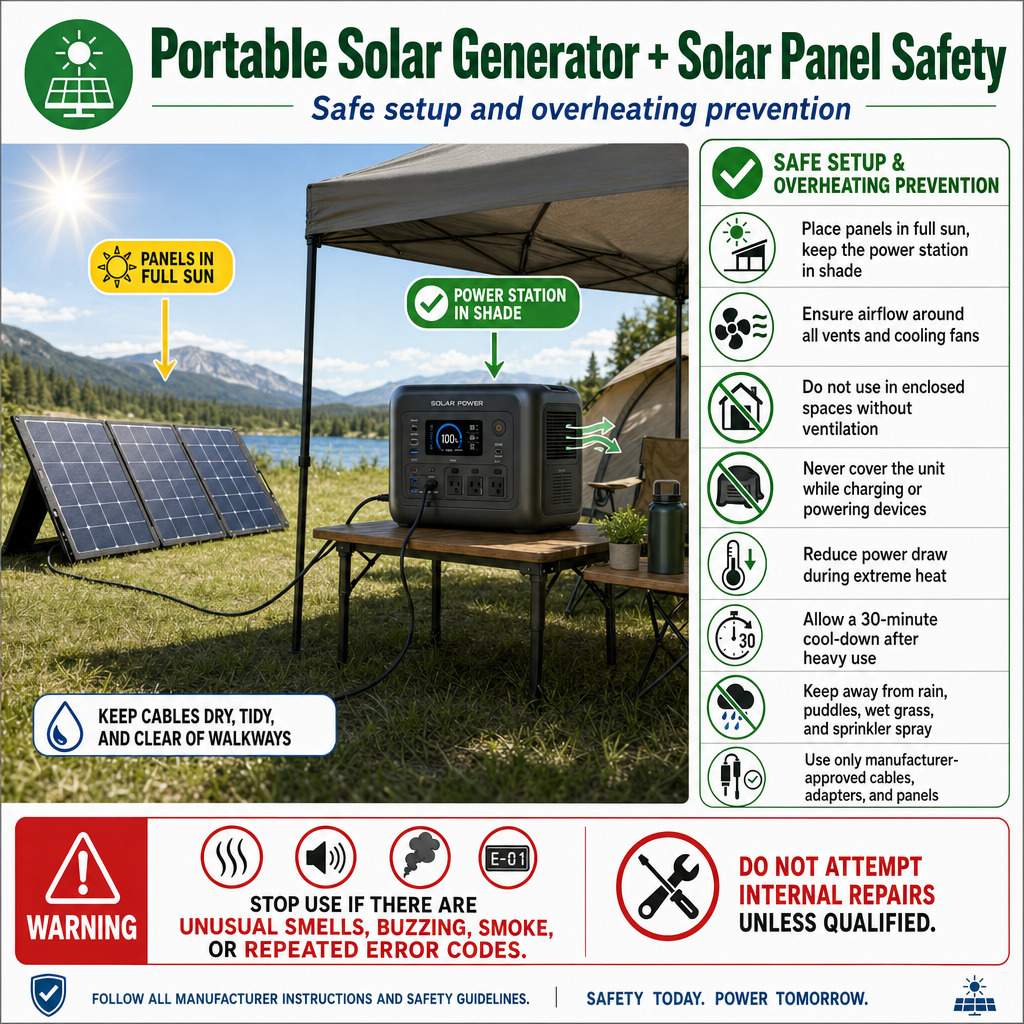
Overheating and Safety Protocols
Portable solar generator with panels contain electronics sensitive to temperature extremes. Overheating triggers protective shutdowns that interrupt operation.
Overheating Prevention Strategies:
- Place power station in shaded area (panels in sun)
- Ensure adequate air circulation around all vents
- Avoid operation in enclosed spaces without ventilation
- Reduce power draw during extreme heat conditions
- Never cover power station or block cooling fans
- Allow 30-minute cool-down after heavy use
Safety Protocol Checklist:
- Monitor display warnings and error codes
- Discontinue use if unusual smells or sounds occur
- Keep away from water and moisture sources
- Use only manufacturer-approved accessories
- Store in fireproof location when possible
- Never attempt internal repairs without expertise
Modern portable solar generator with panels include multiple safety features. Automatic shutoff protects against overtemperature, short circuits, and overload conditions. These systems rarely fail but require respect and proper usage.
Battery Degradation Prevention
All batteries experience gradual capacity loss over time. Proper care extends lifespan and maintains performance longer in your portable solar generator with panels.
Battery Health Best Practices:
- Avoid frequent deep discharges below 10% capacity
- Store at 40-60% charge during extended periods of non-use
- Recharge every 3 months minimum during storage
- Operate within manufacturer temperature specifications
- Use balanced charging cycles (avoid constant partial charges)
- Keep firmware updated for battery management optimization
Signs of Battery Degradation:
- Noticeably shorter runtime than when new
- Longer charging times for full capacity
- Rapid discharge even with minimal loads
- Physical swelling or deformation
- Unusual heat during charging or discharging
LiFePO4 batteries resist degradation better than standard lithium-ion. Quality units maintain 80%+ capacity after 2000-3000 cycles. Budget lithium-ion batteries may degrade noticeably after 500 cycles.
Future Trends
Smart App Integration and AI Optimization
Connectivity transforms portable solar generator with panels into intelligent energy management systems. Smartphone apps provide real-time monitoring and control capabilities.
Current Smart Features:
- Real-time power consumption tracking
- Remote on/off control of output ports
- Battery health and cycle count monitoring
- Charging status notifications
- Firmware updates via Bluetooth or WiFi
- Energy usage history and analytics
Emerging AI Capabilities:
- Predictive power management based on usage patterns
- Weather integration for charging forecasts
- Automatic load prioritization during low battery
- Efficiency optimization recommendations
- Maintenance scheduling based on actual usage
- Integration with smart home ecosystems
Higher Efficiency Panels (25%+ Conversion)
Solar cell technology continues advancing rapidly. Laboratory achievements are transitioning to commercial portable solar generator with panels products.
Current portable panels operate at 18-23% efficiency. Next-generation technologies promise 25-30% conversion rates within 3-5 years. This breakthrough reduces panel size requirements by 20-30% for equivalent output.
Emerging Panel Technologies:
- Tandem silicon-perovskite cells (30%+ efficiency potential)
- Bifacial panels capturing reflected light from ground
- Half-cut cell designs reducing internal resistance
- Anti-reflective coatings improving light capture
- Flexible thin-film developments for unique applications
Higher efficiency reduces the footprint of solar arrays. Backpackers and minimalists benefit from lighter, more compact portable solar generator with panels. RV installations maximize limited roof space more effectively.
Integration with Home Energy Systems
The boundary between portable and stationary solar systems continues blurring. Many generator with solar panel units now support home integration.
Home Integration Possibilities:
- Bidirectional inverters for vehicle-to-home (V2H) power
- Manual transfer switches for circuit-level backup
- Grid-tie capabilities (where regulations permit)
- Battery sharing between portable and fixed systems
- Unified energy monitoring across all power sources
Future portable solar generator with panels may automatically arbitrage between grid, solar, and battery power. Smart management optimizes for cost savings and sustainability. Time-of-use rate structures make battery storage economically compelling.
Portable solar generators increasingly serve dual roles. Weekend camping equipment becomes weekday backup power infrastructure. This versatility maximizes investment value and accelerates adoption.
Conclusion
Portable solar generator with panels represent a transformative technology for mobile power needs. These systems combine environmental responsibility with practical functionality. From weekend camping to emergency preparedness, applications continue expanding.
Choosing the right portable solar generator with panels requires understanding your specific power requirements. Calculate watt-hour needs carefully and select capacity with modest buffer. Balance portability against power output based on intended applications.
Technology improvements continue driving better performance at lower prices. Battery chemistry advances, efficiency gains, and smart features enhance user experience. Early adopters who invested years ago now upgrade to superior second-generation portable solar generator with panels.
The initial investment pays dividends through eliminated fuel costs and enhanced capabilities. Environmental benefits align with growing sustainability awareness. Silent operation and safety advantages improve quality of life significantly.
Whether you’re an outdoor enthusiast, emergency prepper, or off-grid dweller, portable solar generator with panels offer compelling solutions. Modern systems deliver reliability unimaginable just a decade ago. The renewable energy revolution has created accessible, practical tools for energy independence.
Start with clear assessment of your actual needs. Research specific models within your budget tier. Read user reviews and watch video demonstrations before purchasing. Most importantly, remember that the best portable solar generator with panels is one you’ll actually use.
Solar technology empowers individuals to generate clean electricity anywhere. This independence from fuel supply chains and electrical grids provides tangible freedom. As costs decline and performance improves, adoption will accelerate further.
The future of portable power shines bright, powered by the sun above.


